Awareness about the differences between waste types and how to process them remains a major problem in Indonesia, especially in large cities like Jakarta, Bandung, and Surabaya. Often, education about waste sorting is not internalized by the public, resulting in mixed waste and difficulty in recycling. According to data from the Ministry of Environment and Forestry, Indonesia produces at least 10.8 million tons of plastic waste annually, with a recycling rate of only 22%. This concern is the basis for O’waste to exist.
O’waste exists as a solution to the issue of waste sorting. Initiated by students who became aware of this problem, O’waste has evolved into an effort to digitalize waste sorting, which will then simplify the process and utilization of waste, especially plastics and cans.
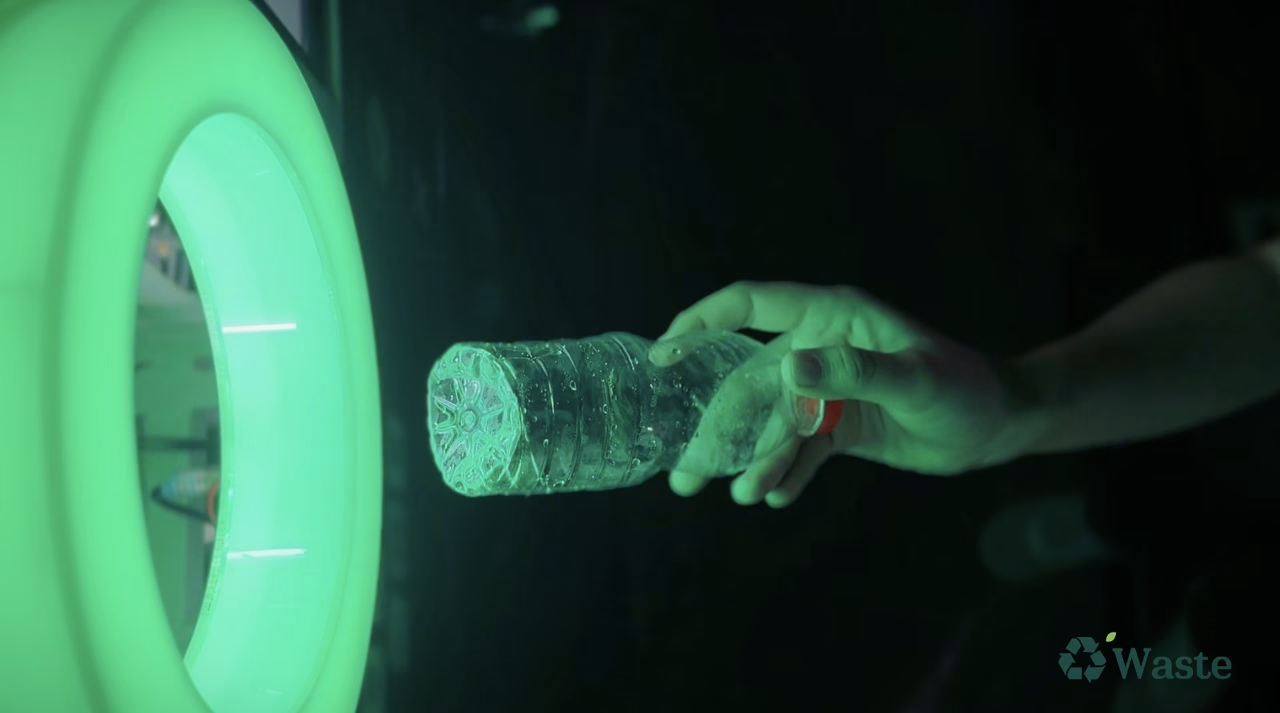
Based in Bandung, West Java, O’waste which means zero waste, hence its name, aims to make Indonesia a country with waste management on par with other developed nations. O’waste has a machine called the Reverse Vending Machine that works the opposite of a typical vending machine. Typically, you go to a vending machine, insert money, and receive items—snacks, drinks, and so on. O’waste’s RVM collects your HDPE plastic, PET plastic, and metal cans, and in exchange, you earn reward points that can be exchanged for cash. You can also track your impact. RMV allows individuals to contribute to solving the plastic waste problem in Indonesia through small, tangible steps. O’waste collaborates with Replast, a company that converts HDPE plastic waste into renewable products. Through this collaboration, O’waste strengthens the implementation of a circular economy from upstream to downstream.
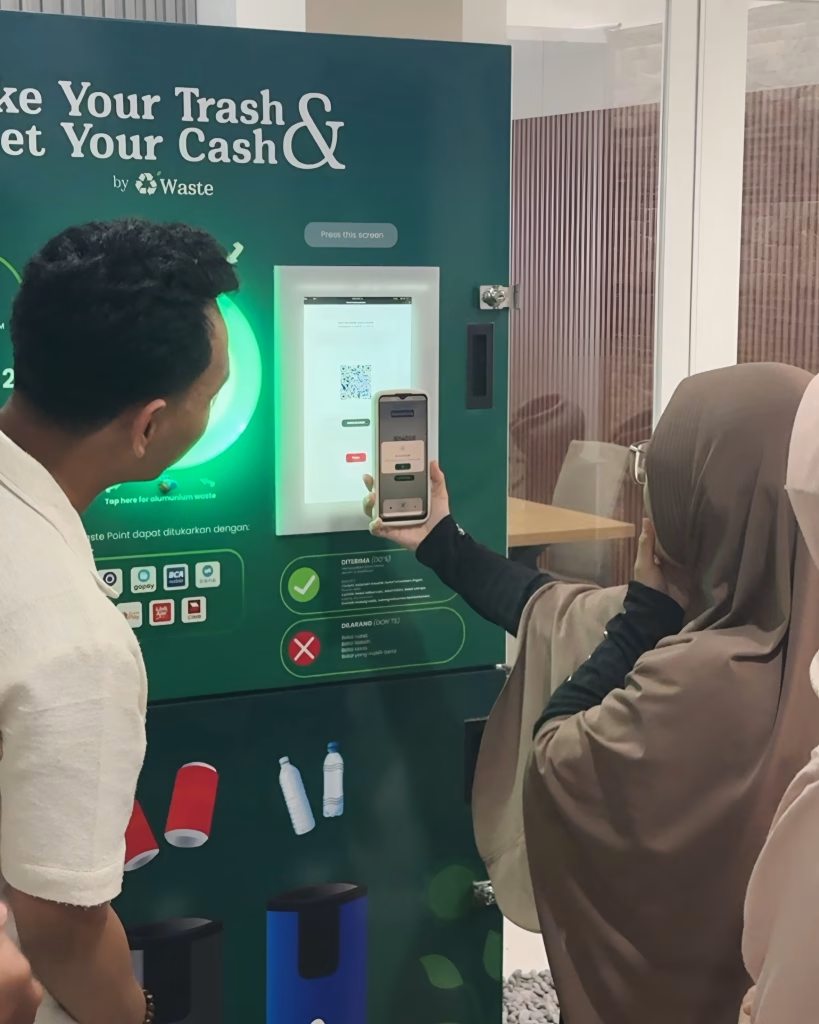
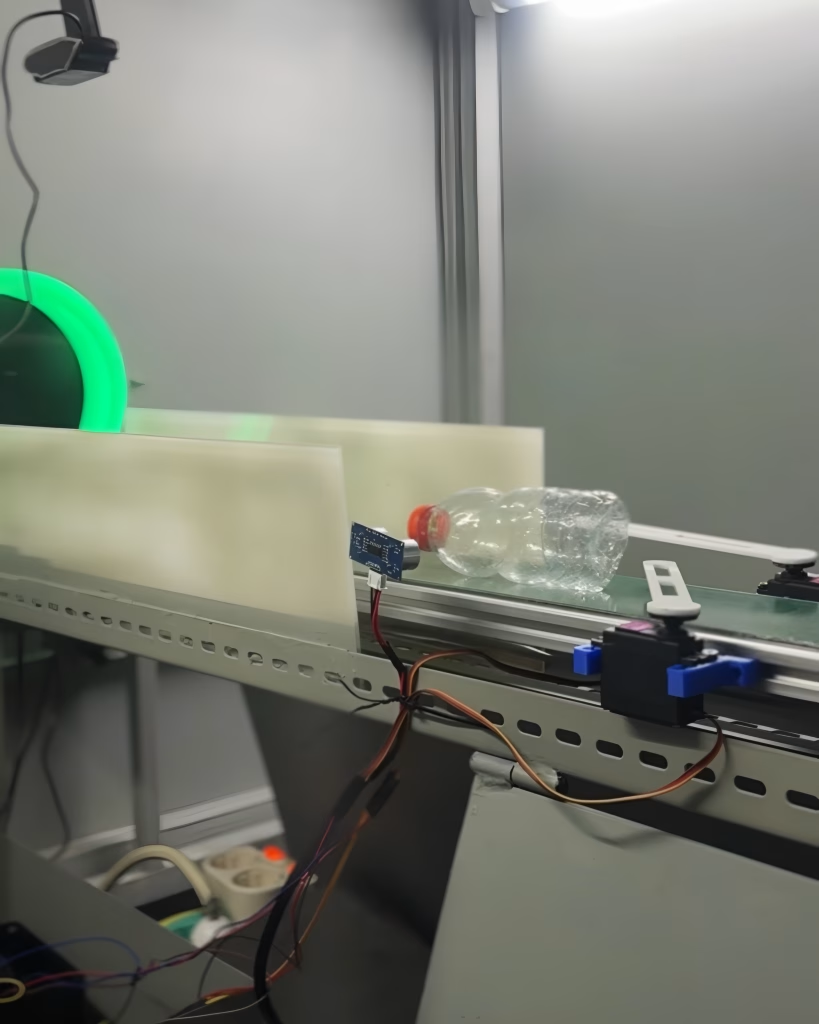
RMV is a manifestation of O’waste’s dreams and aspirations as a community. According to O’waste, the low rate of plastic waste recycling in Indonesia occurs for several reasons. First, there is a lack of infrastructure for sorting and processing waste. As a result, recycling facilities are still minimal and sometimes difficult for the public to access. Second, the incentive system is still weak. In 2021, only about 24.11% of households sorted their waste, as the effort required to visit local waste banks was considered too difficult, leading people to choose to ignore their plastic waste. Third, the plastic waste processing industry is not yet connected. The solution is collaboration from upstream to downstream, operational infrastructure, and a clear incentive system. These series of solutions are manifested into O’waste’s RMV.
In addition, O’waste has numerous other collectives and activities, such as EduWaste, which provides education on the circular economy to college campuses, and Forest Cleanup, which contributes to forest cleanup efforts to prevent wildlife from consuming plastic waste. Their upcoming project is joining the Global Plastic Action Partnership, a cross-border initiative aimed at tackling the impact of plastic waste on biodiversity. These efforts may seem simple, but they are real.
O’waste’s RVM was first placed at PT Lapi Ganesha Utama, a company engaged in engineering and management consulting in West Java. This initial collaboration is expected to open up opportunities for collaboration, where parties who value sustainability and the circular economy can embrace O’waste as partners. This also led O’waste to learn about Pable—a shared value. O’waste and Pable both strive to “close the gap” in the production chain and give waste a second life. O’waste is hoping to expand their impact and scope, from Bandung to Indonesia, from small steps to big leaps.