
Have you ever imagined that rising global temperatures, ozone layer destruction, climate change, sea level rise, loss of wildlife habitat, and other environmental disasters stem from the habit of washing clothes? If not, this is the article for you.
Although still eclipsed by things like burning fossil fuel, the environmental cost of washing clothes with a washing machine is concerningly significant. Since its invention in the nineteenth century, the washing machine has become a fixture in human domestic chores. Originally a labor-intensive activity, washing clothes has now become a simple task that can be done in a flash. Human civilizations across time and cultures have done it in a variety of ways; Europeans placed dirty clothes in a barrel and beat them with sticks, while Asians adopted a more manual approach, using their bare hands to rub stains into the fabric, something some still do today. The first modern electric washing machine was invented in the early 20th century. With the advent of modern washing machines, even drying and hanging out to dry has become much easier. However, as with other innovations in human life, technology is expensive.
The sacrifice for more efficient washing is our environment. Without us realizing it, washing with a washing machine causes more damage to the earth than washing by hand.
Excessive Energy Consumption and Carbon Footprint
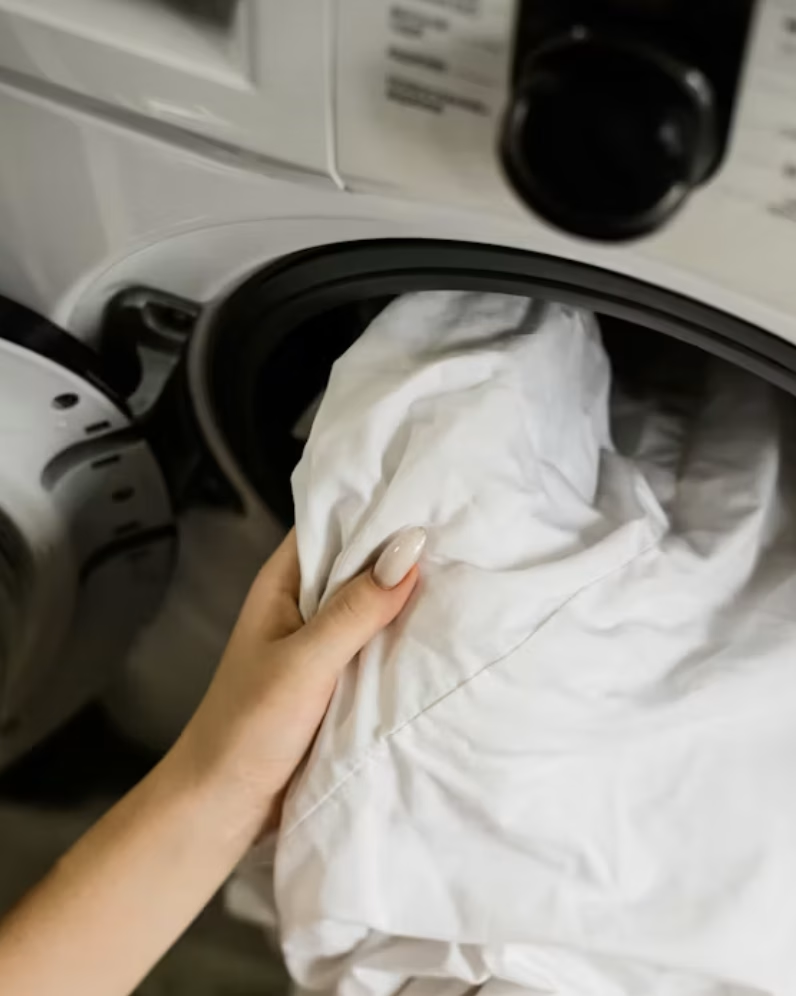
The energy used by washing clothes with a washing machine is enormous, especially when calculated collectively. The process of washing and drying clothes requires at least 300 watts of electricity per hour. Assuming that each family has at least one washing machine, coupled with the proliferation of laundry businesses, imagine the electricity consumption of a city just for washing clothes. Furthermore, washing machines emit an estimated 62 million tonnes of CO2 greenhouse gases each year. This is mainly caused by the temperature we choose when washing. More than 60% of these greenhouse gases come from our habit of choosing warm water temperatures when washing.
Water Usage
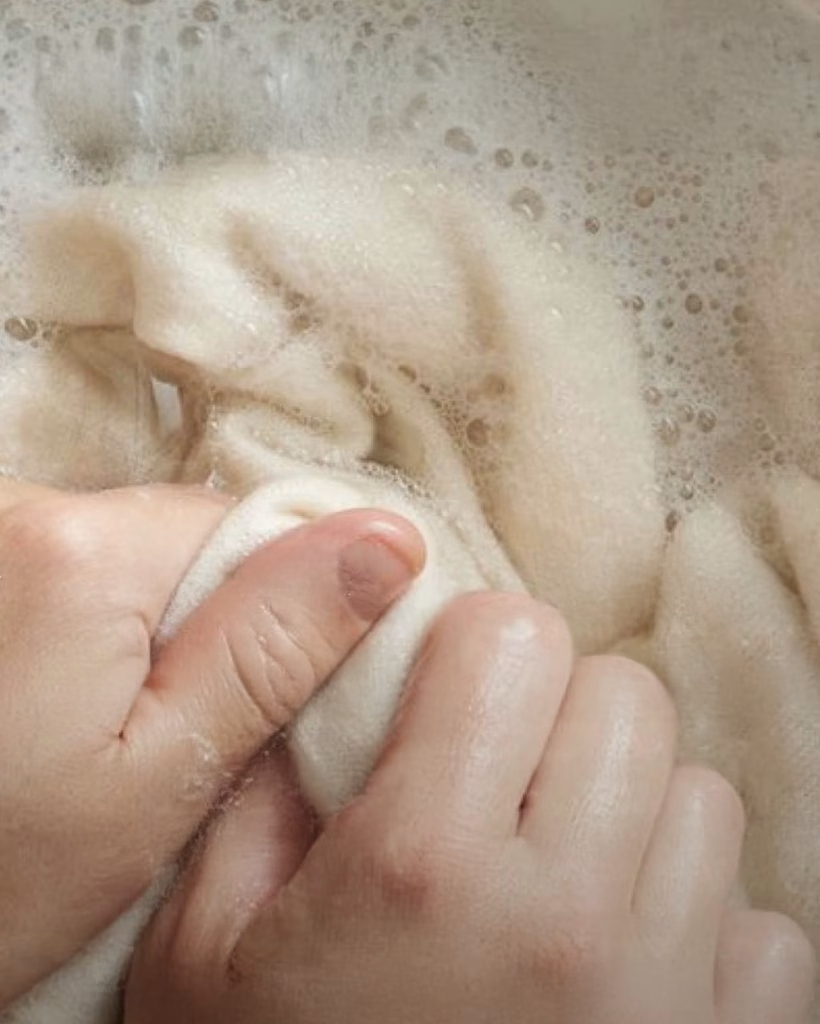
In general, traditional handwashing is more sustainable than machine washing, as handwashing uses at least 29-37 liters of water, while a washing machine requires more than 74 liters of water per run. Furthermore, wastewater from laundry has a high level of toxicity if not treated first. In excess, this waste can cause eutrophication, which is an excess of nutrients in water bodies that prevents aquatic life from growing optimally.
Decreases Clothing Quality
During the washing process, and especially during drying, the rapid and repeated spinning motions cause the fabric fibers that make up the garment to become thinner. This microfiber shedding reduces the durability of your clothes, reducing the lifespan of your clothes, which should last two years, to just one. This forces you to buy new clothes. The result? Yup, good ol’ consumerism.
What Can We Do?
So, what can we do to slow down the destructive impact of washing machines? As individuals, it would be beneficial to be more mindful in all aspects of our lives, including washing clothes. Setting aside time and energy to wash by hand is the best solution—as extreme as it may sound. However, if this isn’t possible, fill the washing machine when doing laundry, as it consumes the same amount of electricity as washing a small amount of laundry. Furthermore, Indonesia’s year-round sunshine offers the advantage of sun-drying clothes —though of course, avoid drying clothes in direct sunlight, as this can damage them. On the other hand, if you own a laundry business, the key is to implement the concept of green manufacturing. Green manufacturing emphasizes environmentally friendly manufacturing at every step of the process: planning, operation, control, maintenance, and production improvement. This means that laundry business owners need to consider the environmental impacts of their activities at every step. What can be done to minimize electricity consumption? How can detergent waste be treated? These questions should be a primary concern for business owners.
Unfortunately, because washing machines have become so ingrained in modern life, we can’t stop their harmful effects, but rather slow them down. But don’t underestimate the small steps you take. Every liter of water or every kilogram of CO2 we save is a significant climate action. It is one step forward toward a better tomorrow.
Happy International Day of Clean Energy!


